
Aviation Runs on Mobile. Attackers Know It.
Electronic Flight Bags and crew scheduling tools moved crew credentials, scheduling data, and operational access onto phones and tablets, many personal, most outside the visibility of a typical airline security stack. MDM confirms enrollment, not compromise.
01
EFBs and crew devices carry the same enterprise access and data as a corporate laptop, but with far less endpoint monitoring behind them.
02
SIM swap and smishing attacks target crew and staff specifically because their devices sit at the intersection of personal and operational access.
03
Crew scheduling and communication apps have become a real, named attack surface, not a hypothetical one.
04
High-risk and rogue telecom networks are the primary source of smishing and IMSI disclosure attacks.
05
Regulators are starting to ask aviation operators to show evidence of device security, not just device management.



How iVerify Protects Aviation Fleets
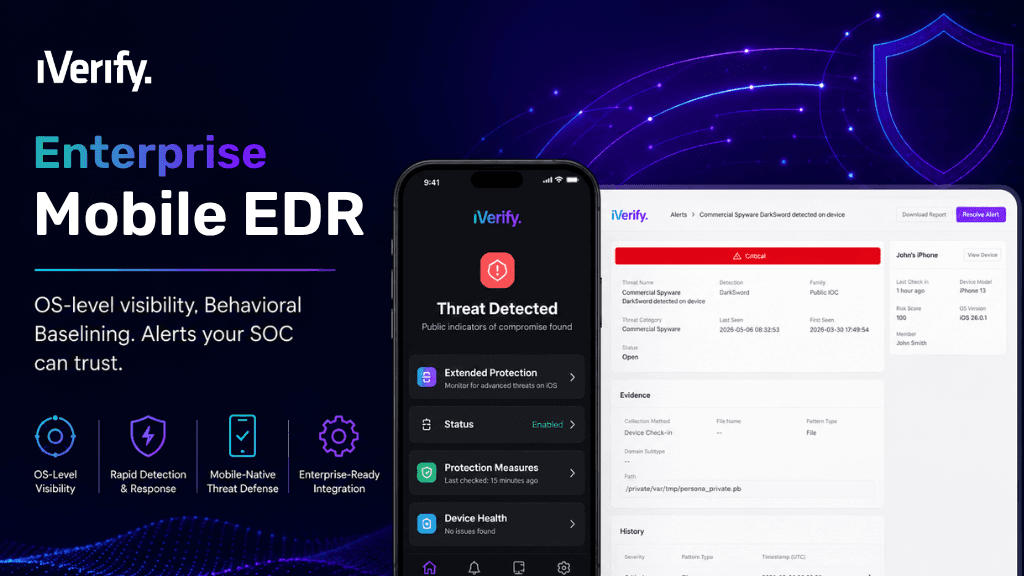
iVerify is the true Mobile EDR platform giving aviation security teams device-level visibility into iOS and Android, across EFBs, corporate-issued devices, and BYOD, without requiring crew to change how they work.
From the flight deck to the gate:
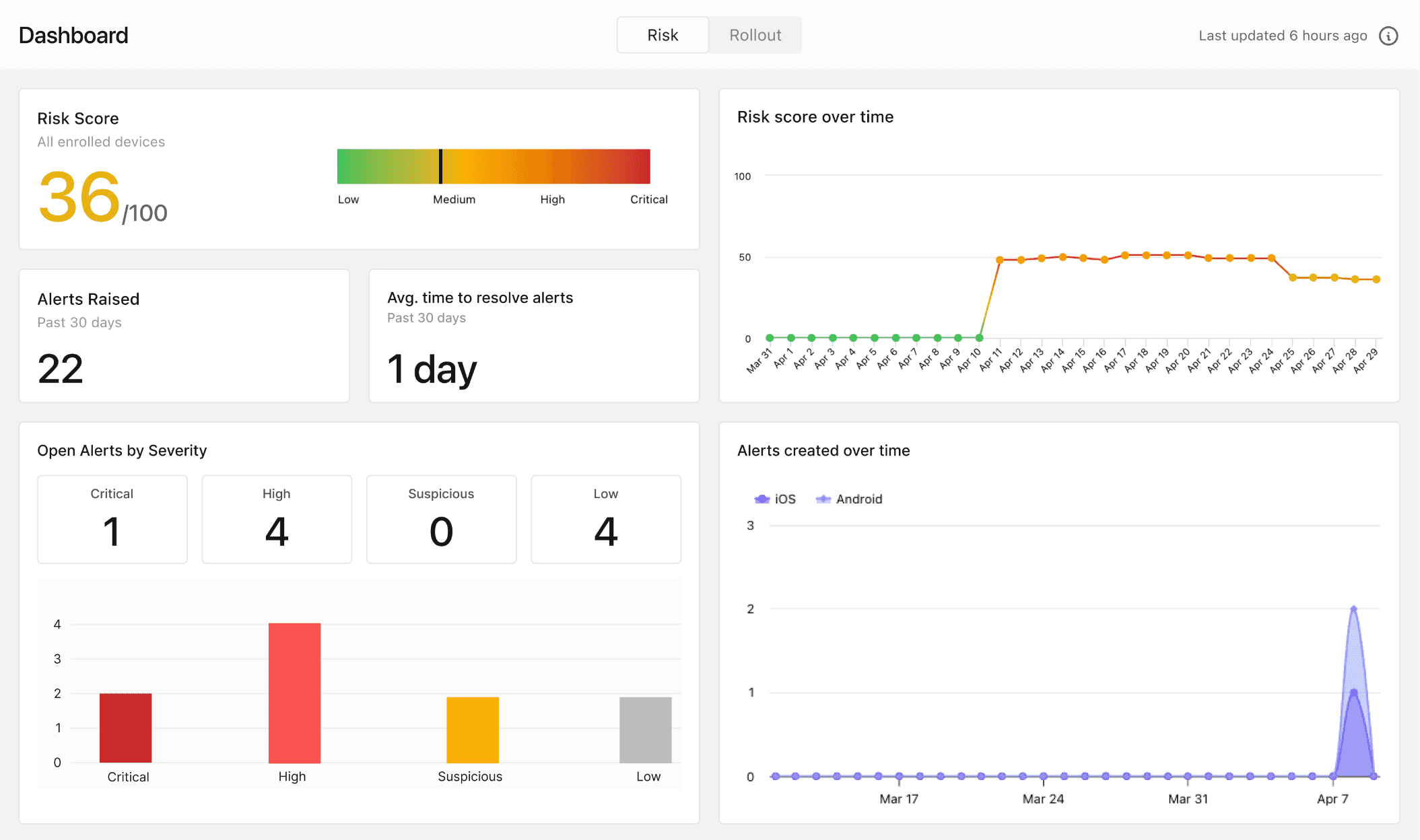
EFB and Crew Device Monitoring
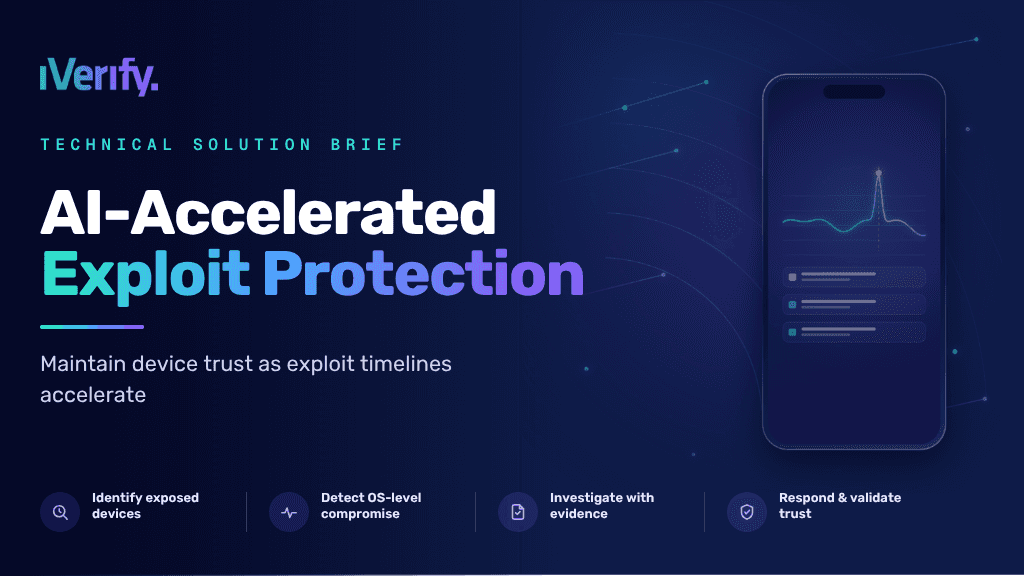
Continuous, kernel-adjacent telemetry flags device compromise on EFBs and crew-issued devices in real time, independent of OS version or patch status.
Crew App Vetting
Every app on a crew or corporate device is scored for risk and continuously monitored for behavioral changes, so a scheduling or communication app that starts behaving differently gets flagged, not just approved once and forgotten.
SIM Swap Detection
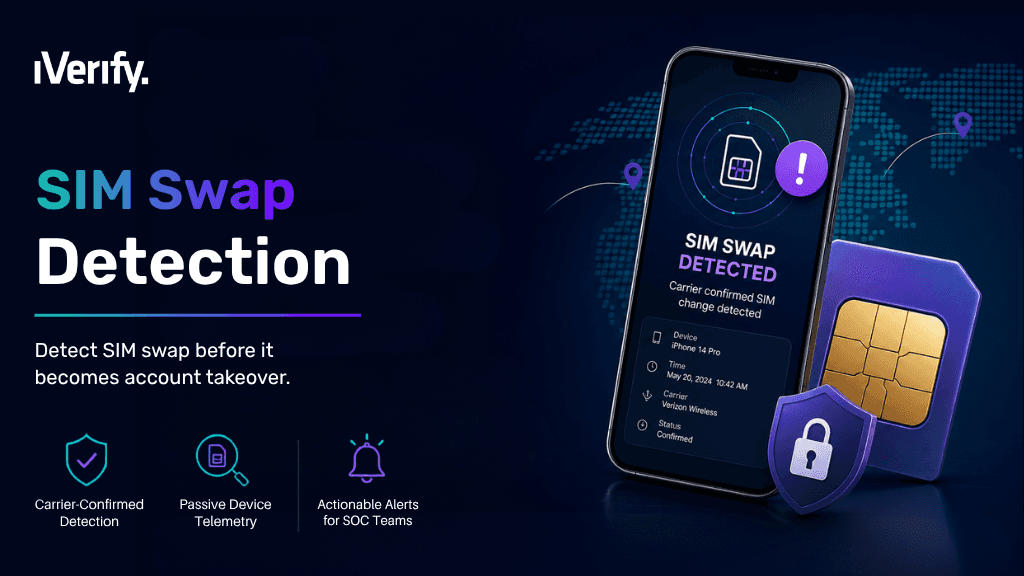
iVerify alerts security teams the moment a carrier-side SIM transfer occurs on a crew member's line, closing a gap that account-takeover attacks are specifically built to exploit.
Smishing Defense
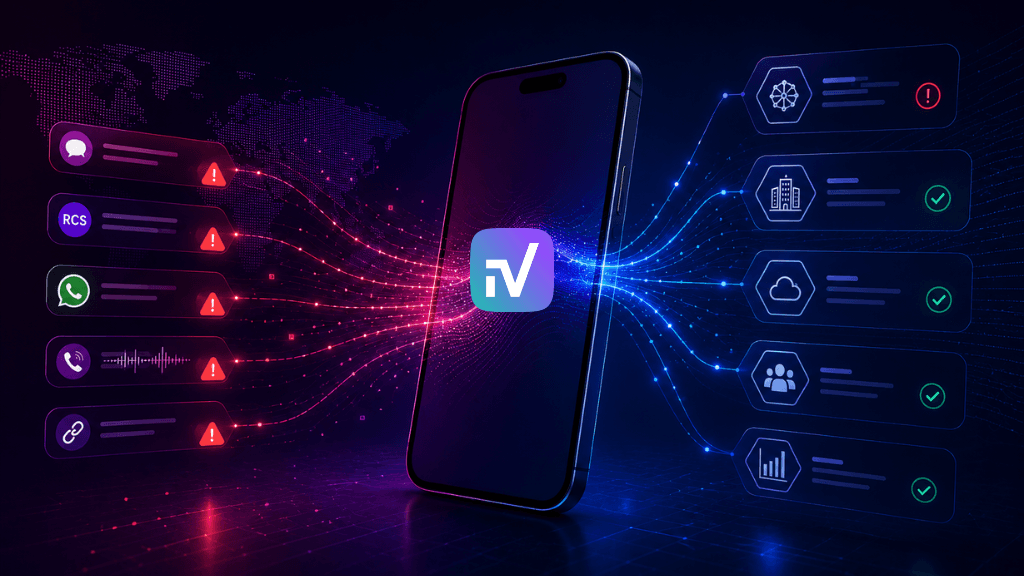
SecureDNS blocks at the DNS level, SmishGuard takes it a step further, analyzing all messages from unknown senders, both link and linkless, for security threats and moving them to the spam folder if there is any doubt to them
High-Risk Travel Protection
iVerify continuously monitors network registrations, identifies high-risk or rogue operators, and alerts when crew devices are exposed to foreign telecom infrastructure or compromised airport and hotel networks\ to protect from travel-specific risks before, during, and after every trip.
Mobile Compliance Mapping
Maps device telemetry and app risk data to the controls aviation security teams are being asked to document, supporting audit and compliance conversations tied to FAA, TSA, and EU requirements.
Where Mobile Fits in Aviation's Regulatory Requirements
Aviation security teams are increasingly asked to show evidence of device security, not just device management. A few examples of where mobile is showing up in aviation-relevant regulation:
FAA AC 120-76E sets expectations for EFB security across the device's entire operational life cycle, not just at initial approval.
TSA's cybersecurity directives for aircraft and airport operators require protection of connected assets, a category mobile devices increasingly fall into.
EU NIS2 (Article 21(2)) names multi-factor authentication as a required control, which raises the question of what protects the recovery channels, like SMS and carrier accounts, that MFA depends on.
ICAO Annex 17 governs aviation security broadly and continues to evolve as aviation's threat picture changes.
iVerify doesn't replace your compliance program. It gives you the device-level evidence, telemetry, and reporting to support it.


BLOG
BYOD Without the Bloat: Securing Airline & Crew Devices Without Invasive MDM

BLOG
The Crew App on Every Phone: Why Scheduling Tools Are a Real Attack Surface
BLOG
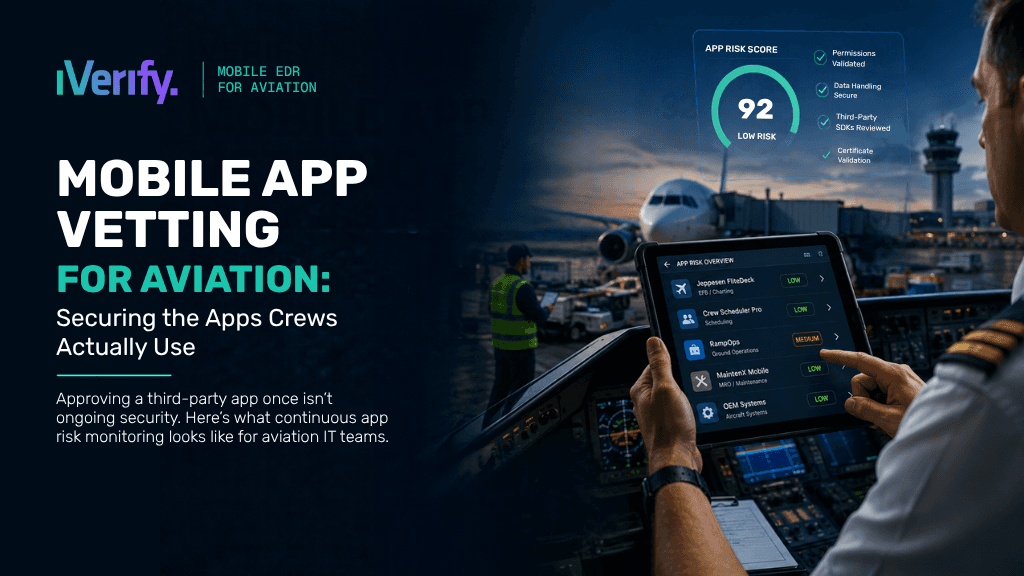
Mobile App Vetting for Aviation: Securing the Apps Crews Actually Use

BLOG
Post-Trip Device Hygiene: What to Do When Crew Return From High-Risk Regions

BLOG
What Is Mobile EDR & Why Does Aviation Need One?